By Jason Veness, Director of Indigenous Interests and Community Wellbeing, Falkirk
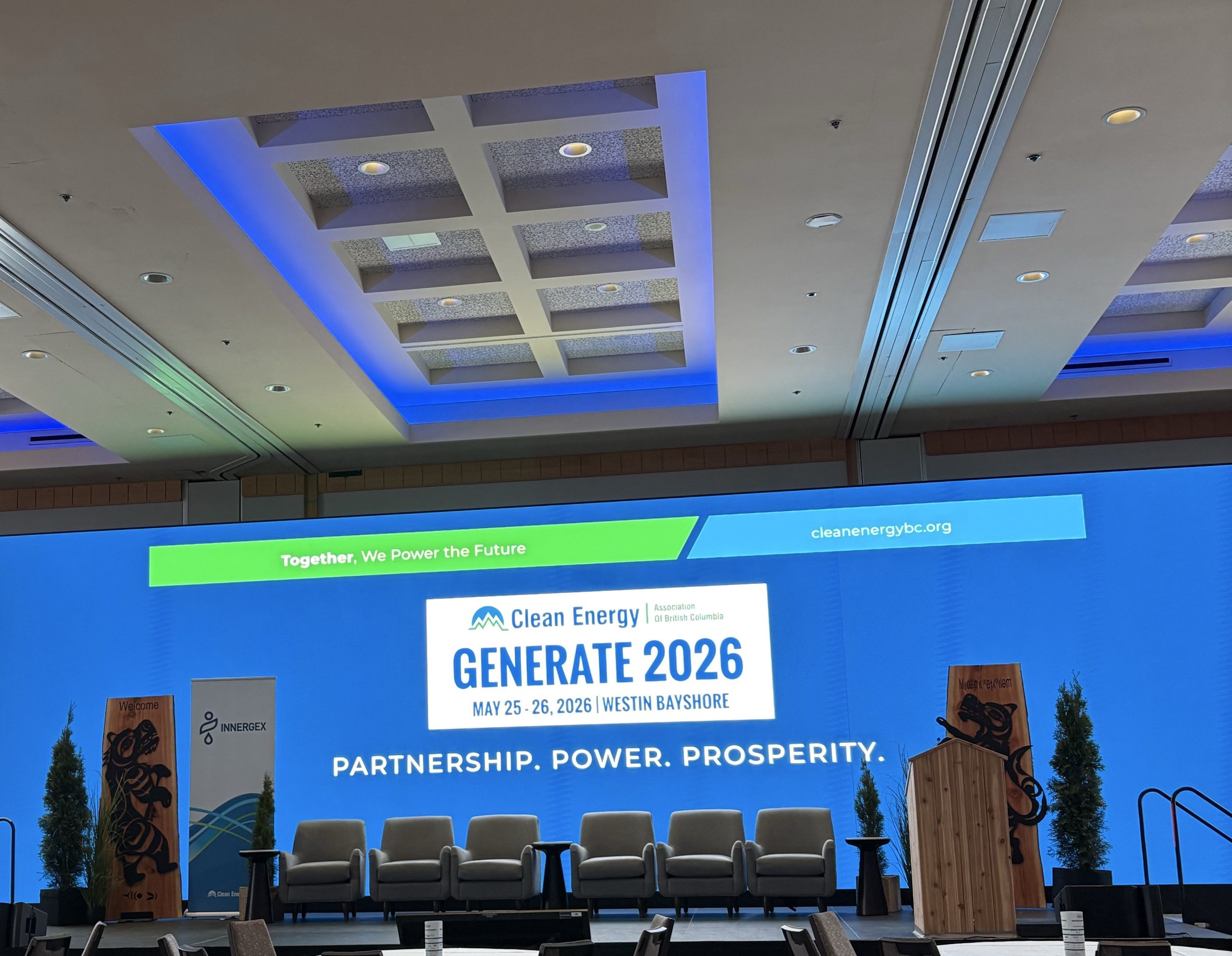
I went to Generate 2026 with a simple question. We hear a lot about Indigenous ownership in BC’s clean energy boom. What does that actually mean for the communities behind the projects?
The numbers are real and they are moving fast. Every one of the four wind projects awarded in BC’s 2025 Call for Power carries 51 percent First Nations equity. That is more than two billion dollars in First Nations ownership of new renewables, in a single call. Federal financing tools now let Nations finance up to 90 percent of an equity stake. Provincial capacity funding has backed more than a hundred clean energy projects led by dozens of Nations. Majority ownership is becoming the standard, not the exception. That is worth pausing on.
Nations are not arriving as stakeholders to be consulted. They are arriving as owners and decision makers, often with organized delegations and clear energy mandates. I sat across from leaders who were already thinking well past equity, to construction jobs, long term operations roles, and the economic legacy a project leaves behind once it is built. That is the conversation maturing in front of us.
The projects I heard about are not framed as transactions. They are framed as relationships and stewardship. Some carry the Nation’s own language and naming into the heart of the project, not as branding added at the end but as authority and decision making built in from the start. More than one leader described their energy work as an expression of their responsibility to land, water, and air. That is a Western project development model and an Indigenous worldview operating at the same time, as equals, each with its own protocols. When both are genuinely respected, the decisions are better.
Here is the thing I keep coming back to. Equity is the starting line, not the finish. Ownership does not automatically deliver employment, training, governance capacity, cultural stewardship, or long term community wellbeing. Those outcomes have to be designed in deliberately, early, and on the Nation’s own terms. Too often the wellbeing work gets bolted on at the end, after the financing closes and the turbines are ordered.
That gap between financial participation and genuine community benefit is where I think the next phase of this industry will be won or lost. It is also the work we care most about at Falkirk. We are independent, not tied to any developer, which means we can be honest about what this work actually requires.
These projects are getting built. The open question is whether the communities behind them are genuinely better off. That is the question I left Generate thinking about.
